
Vanuatu vs Sao Tome and Principe: choosing the right citizenship by investment programme
Elena Klimovskaya (Passportivity) compared the Vanuatu and Sao Tome and Principe citizenship programmes from her firm's practice: how to choose between them, how a case runs from first call to passport and which clients to turn away.
Elena Klimovskaya
- United Arab Emirates
 United Arab Emirates
Key takeaways
- The client's end goal decides the programme. Elena Klimovskaya (Passportivity) points clients who want a cheaper plan B and can wait towards Sao Tome and Principe, and clients who need a passport now or plan business in Asia towards Vanuatu; a route to Portugal or Brazil favours Sao Tome and Principe.
- Family and capital filter the choice first. In practice Sao Tome and Principe currently takes children only up to 17, and Vanuatu asks the investor to show a substantial balance on a personal account beyond the investment itself.
- Vanuatu is faster. Vanuatu takes up to four months, including an in-person biometrics appointment; Sao Tome and Principe now takes up to eight, against the four it announced.
- The check before the contract decides the case. Sanctions exposure, a criminal record or political exposure can mean waiting a year or more rather than collecting a refusal that will follow the client.
- A second passport does not change where you pay tax. In the tax segment, Ekaterina Blynskaya (TaxFinEasy) reminded members that tax follows physical presence, not citizenship.
How the two programmes compare
Elena Klimovskaya said the two programmes look alike at first sight, and clients often arrive set on one because a friend obtained that passport quickly. So the consultation starts with four questions: the client's goal, the family, the budget and how soon the passport is needed.
Family. Vanuatu covers financially dependent children up to 25 inclusive and parents over 50. Sao Tome and Principe announced children up to 30, but in practice it currently takes them only up to 17 inclusive, because the documents required for children aged 18 to 30 have not yet been set. A family with such a child that needs passports now is better served by Vanuatu; otherwise the child waits, or the family applies without them.
Cost. Under the published programme rules, the minimum contribution for a single applicant is US$90,000 in Sao Tome and Principe (Decree-Law No. 7/2025) and US$130,000 in Vanuatu (Development Support Program), so Vanuatu costs noticeably more, depending on the family. Many clients do not realise that government fees and legal fees come on top. Sao Tome and Principe has a single non-refundable option; Vanuatu also offers two partly refundable fund options, introduced in 2023, which suit families better than its donation.
Source of funds. Vanuatu asks the investor to show a substantial balance on a personal account, beyond the investment and fees, to prove the passport is not bought with the last of their money; any source counts, from salary to inheritance or a property sale. Sao Tome and Principe looks more narrowly at employment: having worked, even if now retired, is enough. A client who earns well but cannot show the balance Vanuatu wants may be better placed in Sao Tome and Principe.
Timing. Vanuatu takes up to four months. Biometrics are given in the UAE or Hong Kong, or a consular team can be invited to the client's city, so the timeline also depends on how quickly the client can travel. Sao Tome and Principe now takes six to eight months, not because the programme is new but because demand outran its capacity; the Citizenship Investment Unit is hiring staff in the UAE and on the islands and aims to return to four months.
Track record. Vanuatu's programme has run since 2017 and lost visa-free access to the Schengen area over concerns about its due diligence. Sao Tome and Principe's has run since October 2025. Elena Klimovskaya rated its first year a solid four out of five, with more than 300 approvals out of over 500 applications: simple cases pass easily, while complex ones are still building up practice.
Where each passport leads. For business in Asia, Vanuatu is the better fit: clients use it to open accounts in Hong Kong. For a Greek golden visa, either passport works. For Portugal, Sao Tome and Principe wins: as a member of the Community of Portuguese Language Countries (CPLP), its citizens have a simple route to residence in Portugal, with citizenship after seven years rather than the ten that now apply to others, and to Brazil, where a year of residence opens the way to a passport.
Vanuatu after the loss of visa-free Europe
Elena Klimovskaya said that, against expectations, investors kept coming after the Schengen waiver was suspended, and demand over the past two years has been some 39 per cent higher than before. What changed is the purpose. Clients no longer buy it for visa-free travel but as a plan B for business and for unblocking accounts. For clients whose own passport closes doors, from Russia and Belarus to Iran and Pakistan, it is an alternative document. A US visa is also obtained faster on a Vanuatu passport than on a Sao Tome and Principe one, because the process has been running for years. With so much uncertainty in the world, she said, many clients reason that the more documents they hold, the more options they have.
Checking the client before the contract
Before any contract is signed, Passportivity talks the client through what the passport will and will not do and runs a preliminary due diligence check of the kind each country runs on its future citizens. The client may not know of a risk: an employee of a sanctioned company can sometimes fall under the sanctions himself; an old conviction needs checking for the article, the date it was spent and how it ended; a politically exposed person will not pass. In such cases Passportivity advises waiting one, two or three years, or not applying at all, because a refusal of residence or citizenship stays on record and can damage future visa applications.
A risk does not always mean a refusal. Sometimes another family member can become the main applicant, provided their own source of funds can be documented, or funds the client has forgotten, such as an old flat sale, can be traced and proved. This preparation, which can take two weeks, happens before the contract, and it is what keeps additional requests away once the case is filed.
Passportivity does refuse some clients outright. It will not take on anyone with a conviction for assisting terrorism, however keen the client, even for a programme that does not ask for a criminal record certificate. Nor will it take a client under sanctions who is willing to risk it when the firm knows the case cannot pass: the firm is not willing to risk its reputation.
From first call to passport
Each client works with a lead lawyer and an assistant, and a referring partner can join the case chat. Partners join when the client matters to them or when they want to learn to answer their own clients' questions. After approval the investment is paid with a prescribed payment reference from a foreign account connected to SWIFT, since Russian and Belarusian banks cannot be used; Passportivity refers clients to partners to open one.
When the rules change mid-case
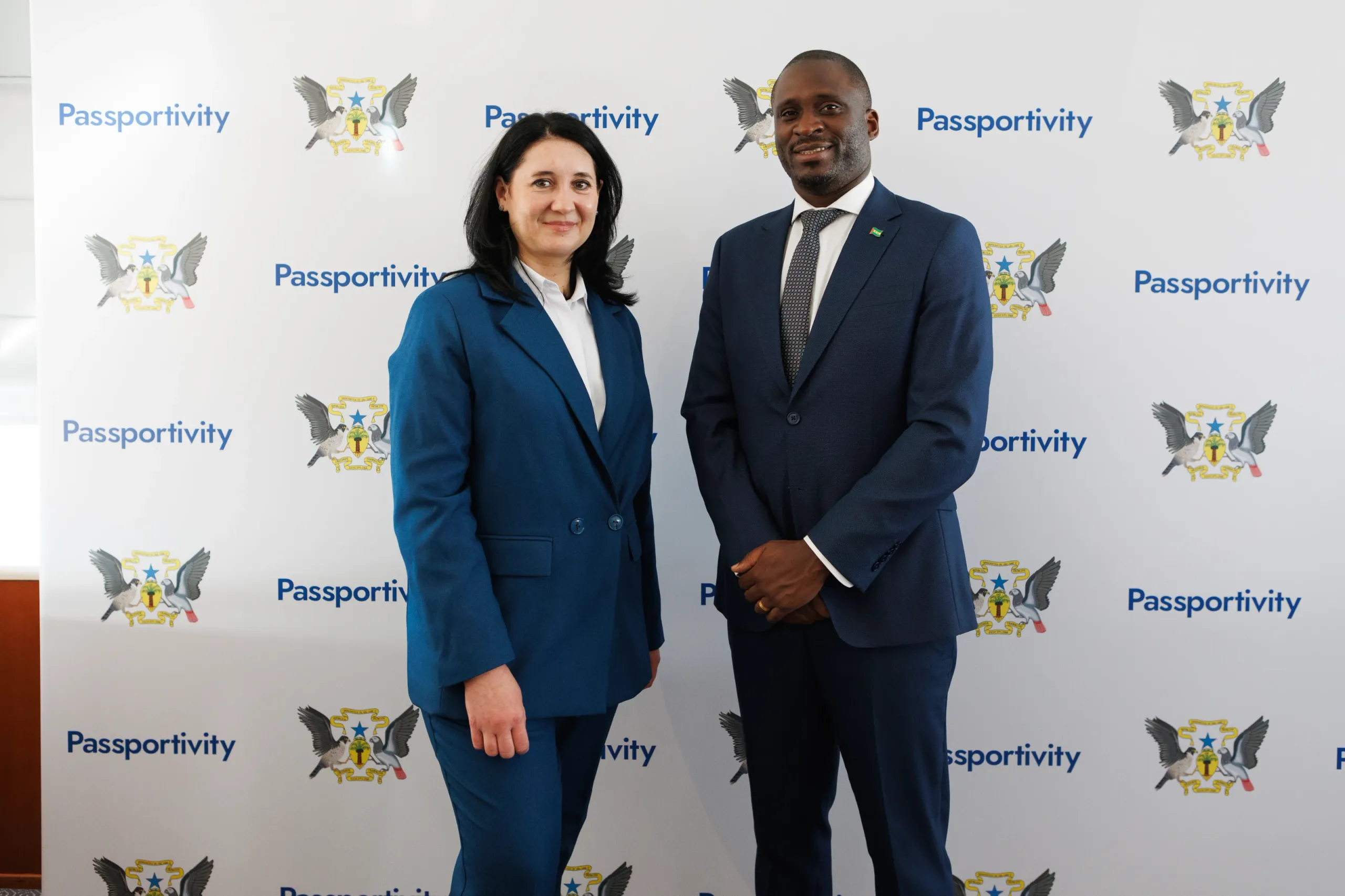
Passportivity is a licensed agent of the Sao Tome and Principe programme, and its lawyers work directly with the officials who run it and track every change. At a meeting the firm hosted in Moscow, for example, Alfredo Trindade, chief operating officer of the Citizenship Investment Unit, explained that relatives can be added to an application after the investor's approval, and that citizens can open accounts and make international transfers through the country's own banks.
Elena Klimovskaya said no programme is immune to change while a case is under way. When a referred client is affected, Passportivity contacts the partner first, and they agree who tells the client: the firm, the partner or both on one call. The firm cannot write into a contract what it does not control, such as how long the government will take; if a client will not accept changed terms, it returns its legal fee and ends the contract, which happens rarely.
Misconceptions at the first consultation
Elena Klimovskaya said clients arrive with illusions drawn from the internet, including from chatbots that still describe Spain's closed golden visa as open. The passport is a travel document, but it does not give visa-free travel to Europe, let alone the right to live there. It does not save tax on its own: Vanuatu's lack of income tax helps only a tax resident. And it does not open accounts anywhere: banks still see the place of birth, and even in Hong Kong not every bank will open an account on a Vanuatu passport, so each bank has to be checked case by case.
Tax: what a second passport changes and what it does not
Ekaterina Blynskaya (TaxFinEasy), who led the tax segment, stressed that a second passport does not by itself change tax residence. She emphasised the importance of physical presence and contrasted Vanuatu, which does not tax worldwide income, with Sao Tome and Principe, which taxes residents’ worldwide income at up to 25 per cent. On this comparison she favoured Vanuatu, while emphasising that clients must still consider obligations in their existing country of tax residence.
For Russian clients, she highlighted notification of a second citizenship, foreign account reporting and controlled foreign company obligations. A change of tax residence can affect the taxation of passive income and the calculation for the year, making timing important. She also warned that foreign accounts and transfers through third countries leave records and should not be treated as invisible to the authorities.
Her advice was to involve a tax adviser before a permanent move, while property sales, investments and transfers within the family can still be planned. For other clients, a short checklist of obligations according to residence status may be enough.
Working with agents
Elena Klimovskaya asked agents who do not handle citizenship themselves to pass the client to Passportivity for the whole consultation, which is led by the firm's client director or by her, with a lawyer joining complex cases. When a partner takes a client to contract alone, the preliminary check can surface issues that force the work to start again. From there the firm takes the case to the documents, discusses the investment options with the client, recommends a tax adviser where a move or business is planned, and supports the client afterwards, for example with what to do when the passport needs renewing.
Her advice to agents new to passport programmes: ask Passportivity for its list of scoring questions, which shows whether a client needs citizenship or residence and which programme fits, along with working materials and training. If a partner prefers not to name the provider to the client, she can join the call as a colleague, without the firm's branding.
Questions from the room
Has anyone with a Sao Tome and Principe passport obtained Brazilian citizenship by naturalisation yet? Not yet, Elena Klimovskaya said: the programme is barely a year old, and the firm learned of the route about six months ago. Passportivity has found a Russian-speaking lawyer in Brazil, who referred a client willing to be the first: the client will obtain a Sao Tome and Principe passport with Passportivity, and the lawyer will then take him through the Brazilian procedure. Residence there comes quickly; the citizenship result will take about a year.
What do clients from Russia buy a Vanuatu passport for? Mostly as a plan B for business, to open accounts in Asia, for example in Hong Kong, and as a route to a Greek golden visa. Elena Klimovskaya added two exceptions. One client needed to unblock an account at a Swiss bank, which confirmed in writing that a Vanuatu passport would do; she completed her business tasks within three months. Another family's child, a rhythmic gymnast barred from international competition, now competes for Vanuatu's national association.
What it means for practice
Start with the client's goal, family, budget and deadline, not with the programme the client names; run the background check before the contract, not after it; and plan the payment route and the client's tax residence before anything is paid.
From the meeting
Practice Briefing: Vanuatu or São Tomé: choosing the right citizenship programme for a client, 4 November 2026.
About the meeting- Key takeaways
- How the two programmes compare
- Vanuatu after the loss of visa-free Europe
- Checking the client before the contract
- From first call to passport
- When the rules change mid-case
- Misconceptions at the first consultation
- Tax: what a second passport changes and what it does not
- Working with agents
- Questions from the room
- What it means for practice
Coming up in the network
- London15:00–16:00
Online
Practice Briefing
Germany's immigration routes: what the rules say and what happens in practice
With Vlad Pinskij
- London15:00–16:10
Online
Practice Briefing
Canada's regional business immigration: from business investment to provincial nomination
With Slava Apel
- London15:00–16:00
Online
Networking
Member introductions: who is new in the network
This recap is general information, not legal, tax or immigration advice. The views are the participants' own.